New Equipment Sized to the House, Not the Old Unit
AC installation and replacement in Collins and the surrounding areas for homes where the existing system was never properly matched to the structure
Homes in Collins and the surrounding areas can vary quite a bit in size, insulation, layout, and duct design, which is why replacing an HVAC system should not be based on the old unit alone. Installing equipment that is too large or too small can lead to uneven temperatures, excess humidity, and unnecessary wear. RSK Heating & Air takes the time to size new systems based on the needs of the home before recommending equipment.
The process includes reviewing the home’s square footage, ceiling height, insulation, windows, and existing ductwork. The duct system is also inspected before installation so any airflow concerns or problem areas can be addressed ahead of time. This helps make sure the new system is set up to perform efficiently from the start.
Contact RSK Heating & Air for a free estimate on HVAC installation or replacement in Collins, GA and the surrounding areas.
What Proper AC Installation Actually Requires
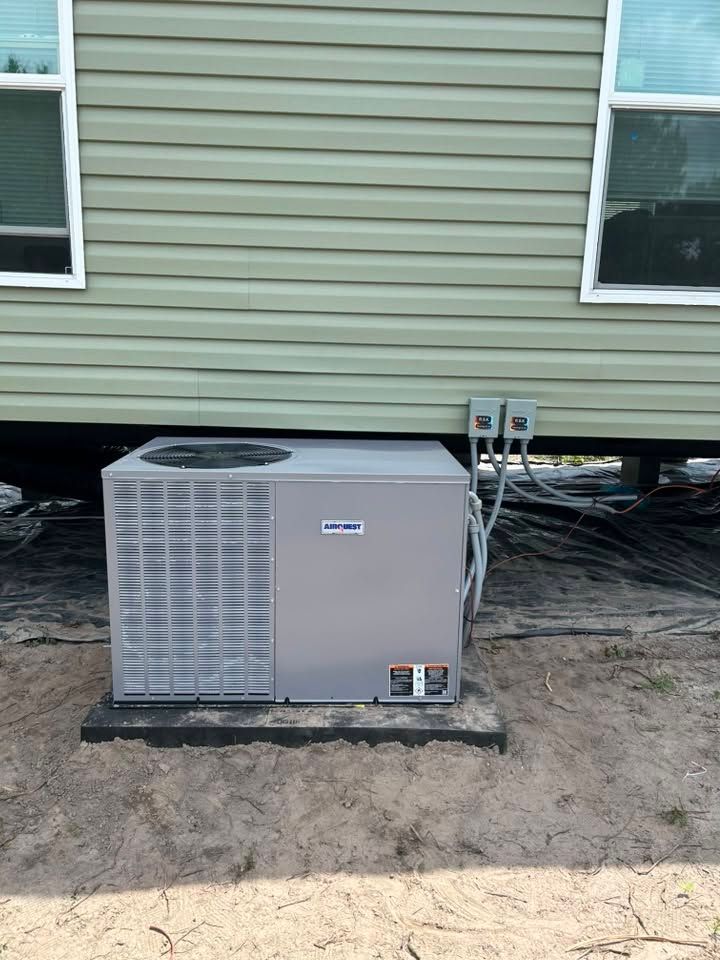
Installing a central air conditioning system involves more than swapping equipment at the pad. The heat load calculation is the document that justifies the equipment recommendation—without it, the sizing decision is a guess. RSK Heating & Air is EPA certified, which is required for refrigerant handling during installation, and the family-owned structure of the company means the owner and crew performing the calculation are the same people connecting the equipment and testing the system at startup.
Once installation is complete, the observable difference in a properly sized system is the run cycle: the unit runs long enough to pull humidity from the air before shutting off, temperatures are consistent between rooms rather than concentrated near the supply vents, and the system reaches setpoint on schedule rather than running continuously during peak afternoon heat. A short-cycling system—one that turns off before the space is fully conditioned—almost always points to oversized equipment, and that problem begins at the selection stage.
Military, veteran, and senior citizen discounts are available on installation work. The scope of the installation visit covers equipment mounting, refrigerant connection, electrical connection, and a full system test before the crew leaves—ductwork repairs identified during the pre-installation inspection are handled separately and priced before any work begins on them.
Answers About How the Installation Work Is Done
These questions address the installation process itself, including how equipment is selected and what the inspection covers before work begins. They apply directly to the conditions found in Savannah-area homes, where duct routing and original equipment sizing vary considerably by construction era.
What is a heat load calculation, and why does it come before equipment selection?
A heat load calculation measures how much cooling capacity the home actually requires based on its physical characteristics; selecting equipment before this step produces a unit that is either too large or too small for the space.
How does the ductwork inspection before installation affect what gets recommended?
If the existing ductwork cannot carry the airflow the new system requires, connecting new equipment without addressing it produces the same underperformance as the old unit; finding those gaps before installation determines whether duct work is part of the project scope.
Why does an oversized AC unit leave rooms feeling humid even when it runs?
An oversized unit reaches setpoint quickly and shuts off before completing a full dehumidification cycle, so moisture stays in the air and surfaces feel clammy even when the thermostat reads correctly.
What happens during the system startup and test after installation is finished?
The technician checks refrigerant charge, confirms airflow at each supply register, verifies the thermostat is communicating with the equipment, and runs the system through a full cycle to confirm it is operating within manufacturer specifications.
How does attic duct condition in older Georgia-area homes factor into a replacement installation?
Duct systems in homes built before modern efficiency standards were often undersized for current cooling loads; a replacement installation that skips the attic inspection may connect a correctly sized unit to ductwork that restricts its output.
RSK Heating & Air also installs and replaces AC systems in Vidalia, collins, Lyons, Reidsville, and beyond. To begin with a heat load review and ductwork inspection for your home, contact RSK Heating & Air directly to schedule your free estimate.