
Room-by-Room Heating and Cooling Without Existing Ductwork
Mini-Split Installation & Repair in Collins and the surrounding areas for apartments, rental houses, and older homes where no ductwork exists
Older apartments and rental houses across Collins and the surrounding areas were built before central air conditioning was standard, which means many of them have no existing ductwork at all—adding a ducted system would require opening walls and ceilings across every room, a scope of work that is rarely practical in an occupied building or a structure with plaster walls. RSK Heating & Air installs and repairs ductless mini-split systems in these properties, sizing each indoor head to the room it serves and connecting it to the outdoor condenser through a compact insulated line set that runs through a small penetration in the exterior wall. The family-run crew handles the outdoor condenser, refrigerant lines, and every indoor head on each installation, including multi-unit buildings.
Every installation begins with a site visit to calculate the load room by room and select head locations based on ceiling height, room layout, and where the line set can be routed cleanly to the outdoor unit. The crew mounts the indoor units, runs the insulated refrigerant line and condensate drain to each head, sets the outdoor condenser on a level pad, pulls a vacuum on the system to remove moisture before charging, and tests airflow and supply air temperature at each head before leaving. That vacuum pull step is a quality indicator worth asking about on any mini-split installation: skipping it leaves moisture in the refrigerant circuit, which degrades performance and shortens compressor life.
Request a free site visit so RSK Heating & Air can size the system to your rooms and identify the best head and condenser locations before any work is scheduled.
What Mini-Split Installation Actually Accomplishes
After installation, each indoor head operates independently, so a bedroom can be held at a different temperature than a living room without one thermostat controlling the whole structure. RSK Heating & Air has installed mini-split systems across multi-unit rental properties, including a building with eleven units, which means the crew is familiar with the sequencing and access challenges of occupied multi-unit buildings—running line sets through common walls without disrupting adjacent units and coordinating power connections when multiple outdoor condensers share the same exterior wall.
Once the system is commissioned, the changes are immediate and specific: each room reaches the set temperature independently, the condensate drain clears moisture from the indoor head to the outside without pooling, and the remote or wall controller for each head responds to setting changes within a single cycle. There are no ducts to seal, no air handler in a closet taking floor space, and no register in the floor or ceiling that can be blocked by furniture.
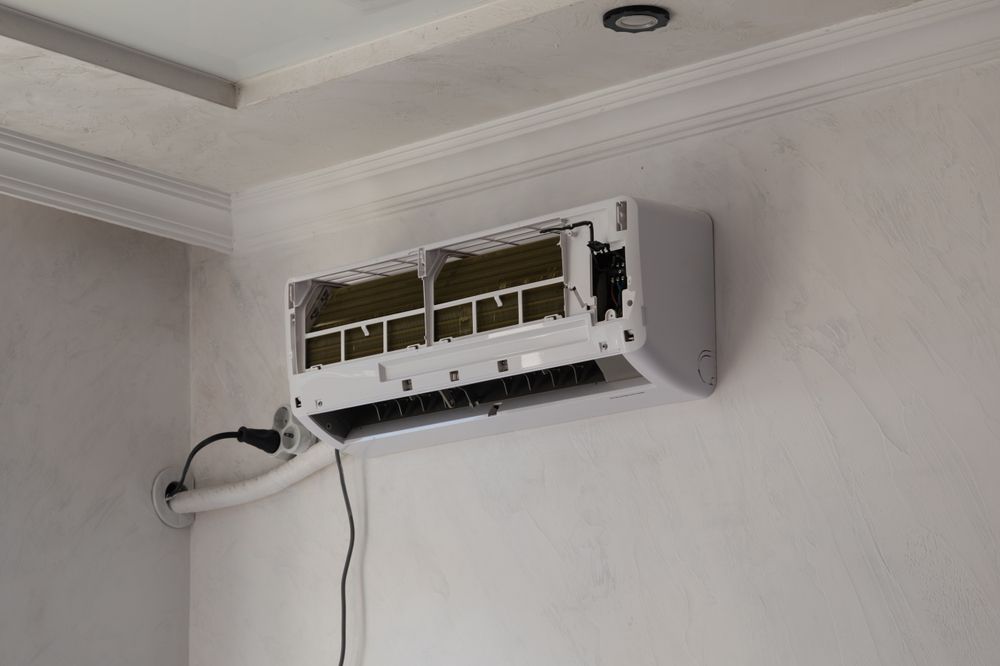
Repair work on existing mini-split systems follows the same diagnostic structure as the installation: the technician checks the indoor head, the line set connections, and the outdoor condenser in sequence to isolate whether the fault is electrical, refrigerant-related, or a drain blockage. A blocked condensate drain is the most common service call on installed mini-split heads, and it shows up as water dripping from the indoor unit—cleared during the service call without replacing any refrigerant-circuit components.
Answers About How the Work Is Done
The following questions address the installation and repair process for ductless mini-split systems, including how sizing decisions are made, what the installation sequence involves, and what maintenance the system needs after it is running.
How is the correct size indoor head determined for each room?
Load calculation is done room by room using the room's square footage, ceiling height, window area and orientation, and insulation condition—a head sized by square footage alone without those factors will either short-cycle in a small tight room or fail to reach temperature in a large room with high ceilings.
What does pulling a vacuum on the system before charging mean, and why does it matter?
Pulling a vacuum uses a vacuum pump connected to the service ports to remove air and moisture from the refrigerant lines before refrigerant is introduced; moisture left in the circuit reacts with refrigerant under pressure to form acids that degrade the compressor internally over time.
How is the line set routed in older Southern Georgia homes and apartment buildings where exterior walls may be plaster or masonry?
The crew selects the shortest practical path from the indoor head to the outdoor condenser, cores a small-diameter hole through the wall at a downward angle so condensate does not follow the penetration into the room, and seals around the line set with a weatherproof cover plate inside and out.
What causes an indoor mini-split head to drip water into the room, and how is it repaired?
Dripping from the indoor unit almost always indicates a blocked condensate drain—the pan fills past its capacity and water exits through the front of the unit rather than the drain line; clearing the blockage with a wet-dry vacuum or a flush restores normal drainage without refrigerant work.
How does a technician verify the system is operating correctly at the end of an installation?
Airflow is checked at the discharge of each indoor head with the fan at rated speed, and supply air temperature is measured at the head while the system runs in both cooling and heating mode to confirm the refrigerant circuit is charged correctly and the reversing valve is functioning.
RSK Heating & Air also installs and repairs mini-split systems in Lyons, Vidalia, Collins, Reidsville, and beyond. To schedule a free estimate for a property without existing ductwork, contact RSK Heating & Air with the number of rooms and the building type so the crew comes prepared to size the system on the first visit.